
Digital Blood Pressure Monitor: Complete Guide to Accurate Home Blood Pressure Monitoring (2026)
Table of Contents
Introduction
High blood pressure, also called hypertension, is one of the leading causes of heart disease, stroke, kidney disease, and premature death worldwide. The alarming fact is that many people have high blood pressure without experiencing any noticeable symptoms. This is why hypertension is often referred to as the “silent killer.”
A digital blood pressure monitor has made it easier than ever to check blood pressure from the comfort of your home. These automatic devices provide fast, convenient, and reliable readings with minimal effort. Whether you’re managing hypertension, monitoring medication effectiveness, or simply keeping track of your cardiovascular health, owning a quality digital BP monitor can make a significant difference.
In this comprehensive guide, you’ll learn everything you need to know about digital blood pressure monitors—from how they work and how to use them correctly to understanding your readings and selecting the best device for your needs.
What Is a Digital Blood Pressure Monitor?
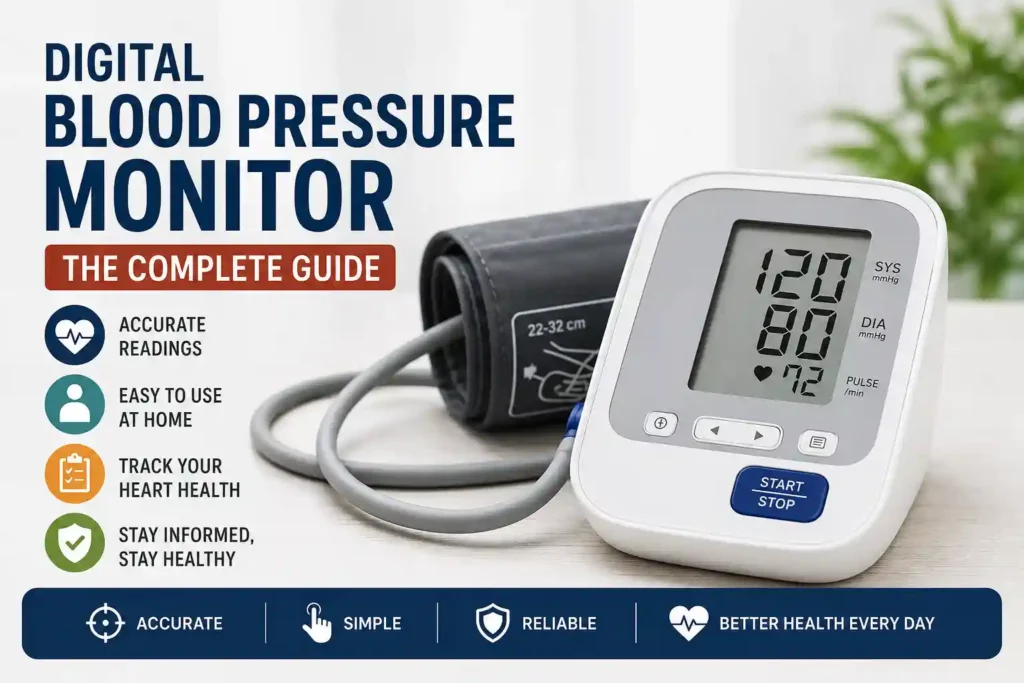
A digital blood pressure monitor is an electronic medical device designed to measure your blood pressure automatically. Unlike traditional mercury or aneroid sphygmomanometers, digital monitors inflate the cuff, detect blood flow using oscillometric technology, and display the systolic pressure, diastolic pressure, and pulse rate on a digital screen.
Modern monitors are designed for home use and require little to no medical training.
Most devices display:
- Systolic Blood Pressure
- Diastolic Blood Pressure
- Heart Rate
- Irregular heartbeat detection (on many models)
Why Monitoring Blood Pressure Matters
Blood pressure changes throughout the day due to stress, physical activity, sleep, medications, diet, and illness.
Regular monitoring helps:
- Detect hypertension early
- Track medication effectiveness
- Reduce cardiovascular risks
- Prevent complications
- Share accurate readings with your healthcare provider
- Identify white-coat hypertension
- Detect masked hypertension
How Does a Digital BP Monitor Work?
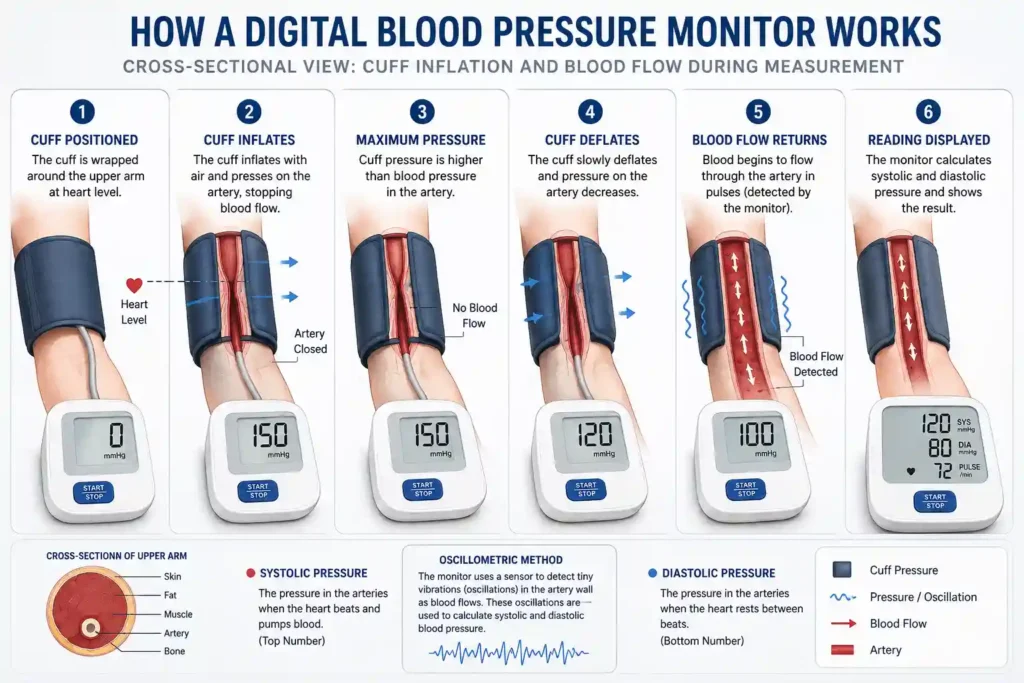
Digital blood pressure monitors use the oscillometric method.
The process involves:
- Wrapping an inflatable cuff around the upper arm or wrist.
- The cuff inflates automatically.
- Blood flow temporarily stops.
- The cuff slowly deflates.
- Sensors detect pressure oscillations.
- Internal algorithms calculate systolic and diastolic blood pressure.
- Results appear within seconds.
This process usually takes less than one minute.
Types of Digital Blood Pressure Monitors
1. Upper Arm Blood Pressure Monitor
This is the most accurate and commonly recommended type.
Advantages:
- Better accuracy
- Suitable for long-term monitoring
- Recommended by most doctors
- Easy to compare readings over time
Best for:
- Hypertension patients
- Elderly individuals
- Regular home monitoring
2. Wrist Blood Pressure Monitor
Smaller and portable.
Advantages:
- Lightweight
- Travel-friendly
- Easy to carry
Disadvantages:
- More sensitive to body position
- Slightly less accurate
- Requires proper wrist positioning
3. Finger Blood Pressure Monitor
Although compact, finger monitors are generally not recommended due to lower accuracy and inconsistent readings.
Parts of a Digital Blood Pressure Monitor
Most automatic monitors include:
- LCD Display
- Inflation Pump
- Air Tube
- Adjustable Arm Cuff
- Start/Stop Button
- Memory Storage
- Battery Compartment
- AC Adapter Port (optional)
Premium models may also include:
- Bluetooth connectivity
- Smartphone synchronization
- Multiple user profiles
- Voice guidance
- Color-coded indicators
How to Use a Digital Blood Pressure Monitor Correctly
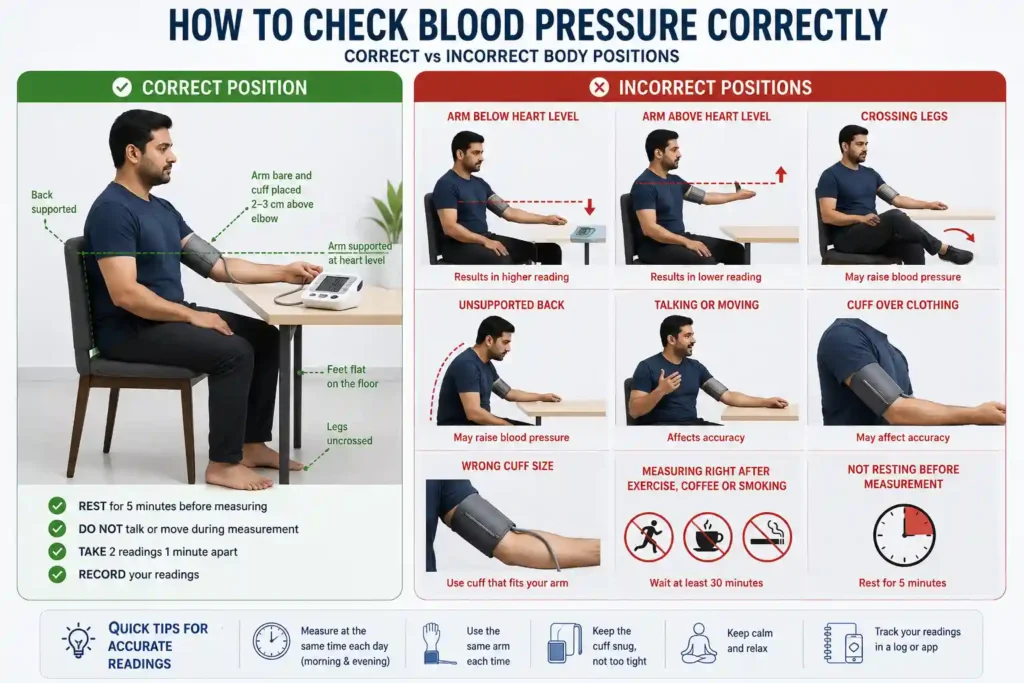
Follow these steps for accurate readings:
Step 1
Avoid:
- Coffee
- Smoking
- Alcohol
- Exercise
for at least 30 minutes before measurement.
Step 2
Empty your bladder.
A full bladder can affect readings.
Step 3
Sit comfortably.
- Back supported
- Feet flat
- Legs uncrossed
Step 4
Rest quietly for 5 minutes.
Step 5
Place the cuff correctly.
The cuff should sit:
- About 2–3 cm above the elbow.
- Snug but not too tight.
- Over bare skin.
Step 6
Keep your arm supported at heart level.
Step 7
Do not:
- Talk
- Move
- Laugh
during measurement.
Step 8
Take two readings one minute apart.
Average both readings.
Understanding Blood Pressure Readings
Blood pressure consists of two numbers.
Example:
120 / 80 mmHg
Systolic Pressure
Top number.
Represents pressure when the heart pumps blood.
Diastolic Pressure
Bottom number.
Represents pressure while the heart rests.
Blood Pressure Classification
| Category | Systolic | Diastolic |
|---|---|---|
| Normal | Below 120 | Below 80 |
| Elevated | 120–129 | Below 80 |
| Stage 1 Hypertension | 130–139 | 80–89 |
| Stage 2 Hypertension | 140+ | 90+ |
| Hypertensive Crisis | 180+ | 120+ |
Seek immediate medical attention if readings are in the hypertensive crisis range, especially if accompanied by symptoms such as chest pain, severe headache, shortness of breath, confusion, or vision changes.
Common Mistakes That Cause Wrong Readings
Many people unknowingly get inaccurate results due to improper technique.
Avoid these mistakes:
- Measuring immediately after exercise
- Talking during measurement
- Crossing legs
- Unsupported back
- Unsupported arm
- Wrong cuff size
- Loose cuff
- Measuring over clothing
- Drinking coffee beforehand
- Smoking before testing
- Taking only one reading
- Moving during measurement
Tips for More Accurate Blood Pressure Measurements
For consistent results:
- Measure at the same time each day.
- Use the same arm each time.
- Record readings in a logbook or app.
- Replace worn-out cuffs when necessary.
- Calibrate your monitor if recommended by the manufacturer.
- Follow the user manual carefully.
- Bring your monitor to your doctor’s appointments occasionally to compare readings.
Who Should Monitor Blood Pressure at Home?
Home monitoring is especially useful for:
- People diagnosed with hypertension
- Adults over 40 years
- Individuals with diabetes
- Patients with kidney disease
- Pregnant women (if advised by a healthcare provider)
- People with heart disease
- Those taking blood pressure medications
- Individuals with a family history of hypertension
- Anyone advised by a doctor to monitor BP regularly
Benefits of Home Blood Pressure Monitoring
Using a digital blood pressure monitor regularly offers many advantages:
- Early detection of abnormal readings
- Better treatment monitoring
- Increased awareness of cardiovascular health
- Reduced need for frequent clinic visits
- More accurate long-term blood pressure trends
- Greater patient involvement in healthcare decisions
How to Choose the Best Digital Blood Pressure Monitor
When buying a monitor, consider:
Accuracy
Look for devices that have been clinically validated.
Cuff Size
Choose a cuff that fits your arm circumference properly.
Display
A large, easy-to-read screen is especially helpful for older adults.
Memory
Stores previous readings for trend analysis.
Multi-User Support
Useful for families.
Bluetooth Connectivity
Allows syncing with smartphone apps for tracking.
Battery Life
Long-lasting batteries or AC adapter support can be convenient.
Ease of Use
One-touch operation is ideal for home users.
Top Features Worth Paying For
Premium digital BP monitors may include:
- Irregular heartbeat detection
- Hypertension indicator
- Morning hypertension alert
- Average of last three readings
- Guest mode
- Large backlit display
- Voice assistance
- USB charging
- App synchronization
- Cloud storage integration
Maintenance and Care
To extend the life of your monitor:
- Store in a dry, cool place.
- Avoid dropping the device.
- Keep the cuff clean.
- Replace batteries promptly.
- Protect from direct sunlight.
- Do not fold the air tube sharply.
- Follow manufacturer maintenance instructions.
Affiliate Buying Guide
If you’re planning to purchase a digital blood pressure monitor, compare products based on:
- Clinical validation
- Accuracy ratings
- Cuff comfort
- Display size
- Memory capacity
- Bluetooth features
- Warranty
- Customer reviews
- Brand reputation
- After-sales support
Affiliate Disclosure:
This article may contain affiliate links. If you purchase through these links, we may earn a small commission at no extra cost to you. This helps support our website and allows us to continue creating free educational health content.
1. Premium Choice
Check – Premium Upper Arm Blood Pressure Monitor.
Why we recommend it: Clinically validated, Bluetooth connectivity, irregular heartbeat detection, multi-user memory, and companion app support.
2. Best Value
Check – Automatic Upper Arm Blood Pressure Monitor.
Why we recommend it: Accurate, easy one-button operation, large display, and excellent value for home monitoring.
3. Budget-Friendly Option
Check – Basic Digital BP Monitor
Why we recommend it: Simple to use, portable, reliable for routine blood pressure checks, and affordable.
4. Travel-Friendly Option
Check – Compact Wrist Blood Pressure Monitor.
Why we recommend it: Lightweight, portable, and ideal for frequent travelers, though proper positioning is essential for accuracy.
Frequently Asked Questions (FAQs)
Is a digital blood pressure monitor accurate?
Yes. Clinically validated upper-arm digital monitors are generally accurate when used according to the manufacturer’s instructions.
Which is better: upper arm or wrist monitor?
Upper-arm monitors are generally recommended because they tend to provide more consistent and accurate readings.
How often should I measure my blood pressure?
Follow your healthcare provider’s advice. Many people monitoring hypertension check it once or twice daily at consistent times.
Can stress affect blood pressure?
Yes. Stress can temporarily increase blood pressure, which is why it’s important to rest quietly before taking a measurement.
Should I take multiple readings?
Yes. Taking two readings about one minute apart and averaging them often provides a more reliable estimate.
Can I use the same monitor for my whole family?
Yes, if the cuff fits each person’s arm properly and the device supports multiple user profiles or readings are recorded separately.
Final Thoughts
A digital blood pressure monitor is one of the most useful devices for home health monitoring. When used correctly, it can help detect hypertension early, monitor treatment progress, and encourage healthier lifestyle habits.
By choosing a clinically validated monitor, using the proper measurement technique, and recording your readings consistently, you can gain valuable insights into your cardiovascular health. Remember that home monitoring complements—but does not replace—regular medical care. If you have consistently high, low, or concerning readings, consult a qualified healthcare professional for personalized evaluation and treatment.
Medical Disclaimer
This article is for educational purposes only and should not be considered medical advice. It is not a substitute for professional diagnosis, treatment, or guidance from a qualified healthcare provider. Never start, stop, or change medications based solely on home blood pressure readings. If you experience symptoms such as severe chest pain, difficulty breathing, weakness on one side of the body, sudden vision changes, or a hypertensive crisis reading, seek emergency medical care immediately.
Read also – Digital Thermometer: Types, Uses, Accuracy, Buying Guide & Best Picks.